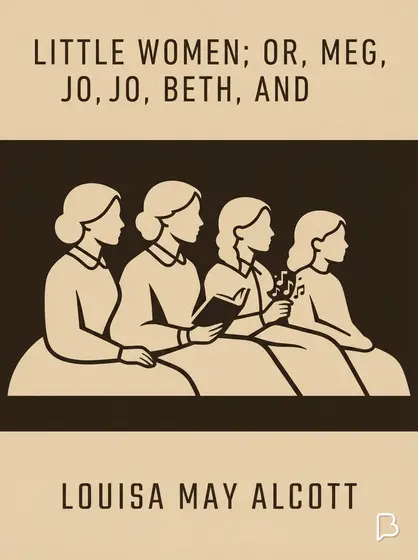
Mujercitas: el comienzo del libro en inglés con traducción al español
Little Women; Or, Meg, Jo, Beth, and Amy
Las primeras páginas de Mujercitas, de Louisa May Alcott: el texto en inglés con la traducción al español bajo cada párrafo, unas 640 palabras, lo mismo que una o dos páginas del lector. Lee en inglés y mira la traducción cuando la necesites. El libro sigue gratis en el lector, con audio y diccionario.
Mujercitas · Libros en inglés para nivel B2 (intermedio alto) · Novela histórica en inglés con traducción al español
Del capítulo «LITTLE WOMEN.»
"Christmas won't be Christmas without any presents," grumbled Jo, lying on the rug.
Sin regalos, la Navidad no será Navidad, refunfuñó Jo, tumbada en la alfombra.
"It's so dreadful to be poor!" sighed Meg, looking down at her old dress.
¡Es tan terrible ser pobre!, suspiró Meg, mirando su vestido viejo.
"I don't think it's fair for some girls to have plenty of pretty things, and other girls nothing at all," added little Amy, with an injured sniff.
No me parece justo que algunas niñas tengan muchas cosas bonitas y otras no tengan nada, añadió la pequeña Amy, con un resoplido de ofensa.
"We've got father and mother and each other," said Beth contentedly, from her corner.
Tenemos a papá y a mamá y nos tenemos las unas a las otras, dijo Beth contenta, desde su rincón.
The four young faces on which the firelight shone brightened at the cheerful words, but darkened again as Jo said sadly,—
Los cuatro rostros jóvenes que la luz del fuego iluminaba se animaron con las alegres palabras, pero volvieron a ensombrecerse cuando Jo dijo con tristeza:
"We haven't got father, and shall not have him for a long time." She didn't say "perhaps never," but each silently added it, thinking of father far away, where the fighting was.
No tenemos a papá, y no lo tendremos por mucho tiempo. No dijo quizá nunca, pero cada una lo añadió en silencio, pensando en papá, lejos, donde estaba la lucha.
Nobody spoke for a minute; then Meg said in an altered tone,—
Nadie habló durante un minuto; luego Meg dijo, con un tono distinto:
"You know the reason mother proposed not having any presents this Christmas was because it is going to be a hard winter for every one; and she thinks we ought not to spend money for pleasure, when our men are suffering so in the army. We can't do much, but we can make our little sacrifices, and ought to do it gladly. But I am afraid I don't;" and Meg shook her head, as she thought regretfully of all the pretty things she wanted.
Ustedes saben que la razón por la que mamá propuso no tener regalos esta Navidad es que será un invierno duro para todos; y piensa que no debemos gastar dinero en placeres cuando nuestros hombres sufren tanto en el ejército. No podemos hacer mucho, pero podemos hacer nuestros pequeños sacrificios, y deberíamos hacerlo con gusto. Pero me temo que yo no; y Meg movió la cabeza, mientras pensaba con pesar en todas las cosas bonitas que deseaba.
"But I don't think the little we should spend would do any good. We've each got a dollar, and the army wouldn't be much helped by our giving that. I agree not to expect anything from mother or you, but I do want to buy Undine and Sintram for myself; I've wanted it so long," said Jo, who was a bookworm.
Pero no creo que lo poco que gastaríamos sirviera de algo. Cada una tiene un dólar, y al ejército no le ayudaría mucho que lo diéramos. Estoy de acuerdo en no esperar nada de mamá ni de ustedes, pero sí quiero comprar Undine y Sintram para mí; lo he deseado tanto tiempo, dijo Jo, que era una ratona de biblioteca.
"I planned to spend mine in new music," said Beth, with a little sigh, which no one heard but the hearth-brush and kettle-holder.
Yo pensaba gastar el mío en música nueva, dijo Beth, con un pequeño suspiro, que nadie oyó sino el cepillo de la chimenea y el agarrador de la tetera.
"I shall get a nice box of Faber's drawing-pencils; I really need them," said Amy decidedly.
Yo conseguiré una bonita caja de lápices de dibujo de Faber; de verdad los necesito, dijo Amy con decisión.
"Mother didn't say anything about our money, and she won't wish us to give up everything. Let's each buy what we want, and have a little fun; I'm sure we work hard enough to earn it," cried Jo, examining the heels of her shoes in a gentlemanly manner.
Mamá no dijo nada sobre nuestro dinero, y no querrá que renunciemos a todo. Compremos cada una lo que queramos y divirtámonos un poco; estoy segura de que trabajamos lo suficiente para ganarlo, exclamó Jo, examinándose los tacones de los zapatos con modales de caballero.
"I know I do,—teaching those tiresome children nearly all day, when I'm longing to enjoy myself at home," began Meg, in the complaining tone again.
Yo sé que yo sí, enseñando a esos niños tan fastidiosos casi todo el día, cuando lo que ansío es disfrutar en casa, comenzó Meg, otra vez con tono quejumbroso.
"You don't have half such a hard time as I do," said Jo. "How would you like to be shut up for hours with a nervous, fussy old lady, who keeps you trotting, is never satisfied, and worries you till you're ready to fly out of the window or cry?"
Tú no la pasas ni la mitad de mal que yo, dijo Jo. ¿Te gustaría estar encerrada durante horas con una señora vieja, nerviosa y quisquillosa, que te tiene todo el día de acá para allá, nunca está satisfecha y te preocupa hasta que estás a punto de saltar por la ventana o ponerte a llorar?
"It's naughty to fret; but I do think washing dishes and keeping things tidy is the worst work in the world. It makes me cross; and my hands get so stiff, I can't practise well at all;" and Beth looked at her rough hands with a sigh that any one could hear that time.
Es malo quejarse; pero de verdad creo que lavar platos y mantener todo ordenado es el peor trabajo del mundo. Me pone de mal humor; y las manos se me ponen tan tiesas que no puedo practicar bien; y Beth miró sus manos ásperas con un suspiro que esa vez cualquiera pudo oír.
"I don't believe any of you suffer as I do," cried Amy; "for you don't have to go to school with impertinent girls, who plague you if you don't know your lessons, and laugh at your dresses, and label your father if he isn't rich, and insult you when your nose isn't nice."
No creo que ninguna de ustedes sufra como yo, exclamó Amy; porque ustedes no tienen que ir a la escuela con niñas impertinentes, que te mortifican si no sabes las lecciones, se ríen de tus vestidos, le ponen etiquetas a tu padre si no es rico y te insultan cuando tu nariz no es bonita.
"If you mean libel, I'd say so, and not talk about labels, as if papa was a pickle-bottle," advised Jo, laughing.
Si quieres decir difamación, yo lo diría así, y no hablaría de etiquetas, como si papá fuera un frasco de encurtidos, aconsejó Jo, riéndose.
"I know what I mean, and you needn't be statirical about it. It's proper to use good words, and improve your vocabilary," returned Amy, with dignity.
Yo sé lo que quiero decir, y no necesitas ser satírica al respecto. Es correcto usar buenas palabras y mejorar tu vocabulario, respondió Amy, con dignidad.
"Don't peck at one another, children. Don't you wish we had the money papa lost when we were little, Jo? Dear me! how happy and good we'd be, if we had no worries!" said Meg, who could remember better times.
No se piquen unas a otras, niñas. ¿No desearías que tuviéramos el dinero que papá perdió cuando éramos pequeñas, Jo? ¡Dios mío! qué felices y buenas seríamos si no tuviéramos preocupaciones, dijo Meg, que podía recordar tiempos mejores.
Seguir leyendo gratisCada oración traducida, audio natural, diccionario con un toque