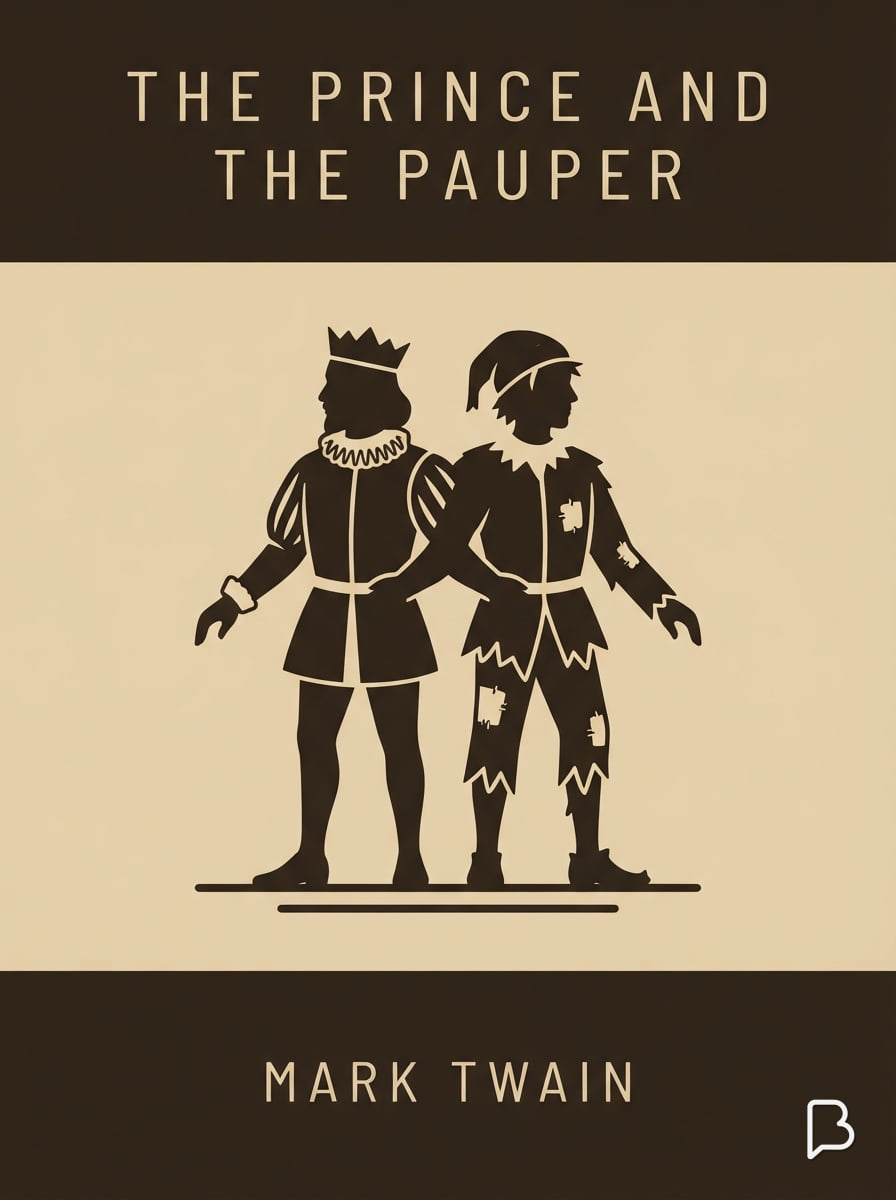
El príncipe y el mendigo: el comienzo del libro en inglés con traducción al español
The Prince and the Pauper
Las primeras páginas de El príncipe y el mendigo, de Mark Twain: el texto en inglés con la traducción al español bajo cada párrafo, unas 550 palabras, lo mismo que una o dos páginas del lector. Lee en inglés y mira la traducción cuando la necesites. El libro sigue gratis en el lector, con audio y diccionario.
Chapter I. The birth of the Prince and the Pauper.
Capítulo I. El nacimiento del príncipe y el mendigo.
In the ancient city of London, on a certain autumn day in the second quarter of the sixteenth century, a boy was born to a poor family of the name of Canty, who did not want him. On the same day another English child was born to a rich family of the name of Tudor, who did want him. All England wanted him too. England had so longed for him, and hoped for him, and prayed God for him, that, now that he was really come, the people went nearly mad for joy. Mere acquaintances hugged and kissed each other and cried. Everybody took a holiday, and high and low, rich and poor, feasted and danced and sang, and got very mellow; and they kept this up for days and nights together. By day, London was a sight to see, with gay banners waving from every balcony and housetop, and splendid pageants marching along. By night, it was again a sight to see, with its great bonfires at every corner, and its troops of revellers making merry around them. There was no talk in all England but of the new baby, Edward Tudor, Prince of Wales, who lay lapped in silks and satins, unconscious of all this fuss, and not knowing that great lords and ladies were tending him and watching over him—and not caring, either. But there was no talk about the other baby, Tom Canty, lapped in his poor rags, except among the family of paupers whom he had just come to trouble with his presence.
En la antigua ciudad de Londres, cierto día de otoño del segundo cuarto del siglo dieciséis, nació un niño en una familia pobre de apellido Canty, que no lo quería. Ese mismo día nació otro niño inglés en una familia rica de apellido Tudor, que sí lo quería. Toda Inglaterra también lo quería. Inglaterra lo había deseado tanto, y había esperado tanto de él, y había rogado tanto a Dios por él, que, ahora que realmente había llegado, el pueblo casi se volvió loco de alegría. Meros conocidos se abrazaban y se besaban y lloraban. Todo el mundo se tomó un día de fiesta, y altos y bajos, ricos y pobres, festejaron y bailaron y cantaron, y se pusieron muy alegres; y siguieron así días y noches enteros. De día, Londres era un espectáculo digno de verse, con alegres estandartes ondeando en cada balcón y tejado, y espléndidos desfiles marchando por las calles. De noche, era de nuevo un espectáculo digno de verse, con sus grandes hogueras en cada esquina, y sus tropas de juerguistas divirtiéndose a su alrededor. No se hablaba en toda Inglaterra más que del nuevo bebé, Eduardo Tudor, príncipe de Gales, que yacía envuelto en sedas y rasos, inconsciente de todo este alboroto, y sin saber que grandes señores y damas lo atendían y velaban por él, y sin importarle tampoco. Pero no se hablaba del otro bebé, Tom Canty, envuelto en sus pobres harapos, excepto entre la familia de mendigos a la que acababa de molestar con su presencia.
Chapter II. Tom’s early life.
Capítulo II. La primera infancia de Tom.
Let us skip a number of years.
Saltémonos varios años.
London was fifteen hundred years old, and was a great town—for that day. It had a hundred thousand inhabitants—some think double as many. The streets were very narrow, and crooked, and dirty, especially in the part where Tom Canty lived, which was not far from London Bridge. The houses were of wood, with the second story projecting over the first, and the third sticking its elbows out beyond the second. The higher the houses grew, the broader they grew. They were skeletons of strong criss-cross beams, with solid material between, coated with plaster. The beams were painted red or blue or black, according to the owner’s taste, and this gave the houses a very picturesque look. The windows were small, glazed with little diamond-shaped panes, and they opened outward, on hinges, like doors.
Londres tenía mil quinientos años de antigüedad, y era una gran ciudad para la época. Tenía cien mil habitantes; algunos creen que el doble. Las calles eran muy estrechas, torcidas y sucias, especialmente en la parte donde vivía Tom Canty, que no quedaba lejos del Puente de Londres. Las casas eran de madera, con el segundo piso sobresaliendo sobre el primero, y el tercero sacando los codos más allá del segundo. Cuanto más altas crecían las casas, más anchas se volvían. Eran esqueletos de fuertes vigas entrecruzadas, con material sólido entre ellas, recubierto de yeso. Las vigas estaban pintadas de rojo, azul o negro, según el gusto del propietario, y esto daba a las casas un aspecto muy pintoresco. Las ventanas eran pequeñas, con vidrios de pequeños paneles en forma de rombo, y se abrían hacia afuera, sobre bisagras, como puertas.
The house which Tom’s father lived in was up a foul little pocket called Offal Court, out of Pudding Lane. It was small, decayed, and rickety, but it was packed full of wretchedly poor families. Canty’s tribe occupied a room on the third floor. The mother and father had a sort of bedstead in the corner; but Tom, his grandmother, and his two sisters, Bet and Nan, were not restricted—they had all the floor to themselves, and might sleep where they chose. There were the remains of a blanket or two, and some bundles of ancient and dirty straw, but these could not rightly be called beds, for they were not organised; they were kicked into a general pile, mornings, and selections made from the mass at night, for service.
La casa en que vivía el padre de Tom estaba al fondo de un callejón inmundo llamado Offal Court, que salía de Pudding Lane. Era pequeña, ruinosa y tambaleante, pero estaba atestada de familias miserablemente pobres. La tribu de los Canty ocupaba un cuarto en el tercer piso. La madre y el padre tenían una especie de armazón de cama en el rincón; pero Tom, su abuela y sus dos hermanas, Bet y Nan, no tenían restricciones: disponían de todo el suelo para ellos, y podían dormir donde quisieran. Había los restos de una o dos mantas, y algunos manojos de paja vieja y sucia, pero esto no podía llamarse propiamente camas, pues no estaban organizadas; por las mañanas las echaban a un montón general, y por la noche se hacían selecciones del montón para el servicio.
Seguir leyendo gratisCada oración traducida, audio natural, diccionario con un toque