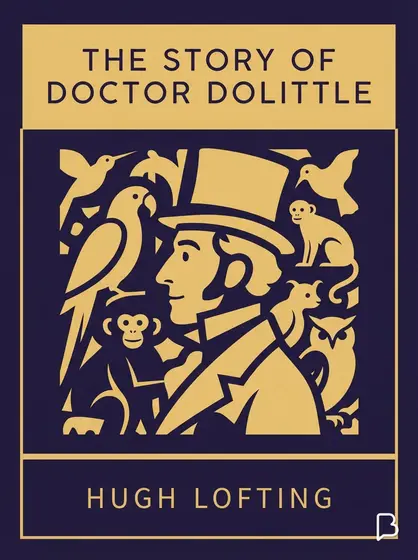
La historia del doctor Dolittle: el comienzo del libro en inglés con traducción al español
The Story of Doctor Dolittle
Las primeras páginas de La historia del doctor Dolittle, de Hugh Lofting: el texto en inglés con la traducción al español bajo cada párrafo, unas 640 palabras, lo mismo que una o dos páginas del lector. Lee en inglés y mira la traducción cuando la necesites. El libro sigue gratis en el lector, con audio y diccionario.
La historia del doctor Dolittle · Libros en inglés para nivel A2 (elemental) · Fantasía en inglés con traducción al español
Del capítulo «THE FIRST CHAPTER PUDDLEBY»
ONCE upon a time, many years ago—when our grandfathers were little children—there was a doctor; and his name was Dolittle—John Dolittle, M.D. “M.D.” means that he was a proper doctor and knew a whole lot.
Había una vez, hace muchos años, cuando nuestros abuelos eran niños pequeños, un médico que se llamaba Dolittle, John Dolittle, M.D. M.D. significa que era un médico de verdad y que sabía muchísimo.
He lived in a little town called, Puddleby-on-the-Marsh. All the folks, young and old, knew him well by sight. And whenever he walked down the street in his high hat everyone would say, “There goes the Doctor!—He’s a clever man.” And the dogs and the children would all run up and follow behind him; and even the crows that lived in the church-tower would caw and nod their heads.
Vivía en un pueblecito llamado Puddleby-on-the-Marsh. Todos los vecinos, jóvenes y viejos, lo conocían de vista. Y siempre que caminaba por la calle con su sombrero de copa, todos decían: «¡Ahí va el Doctor! Es un hombre inteligente». Y los perros y los niños corrían a seguirlo por detrás; e incluso los cuervos que vivían en la torre de la iglesia graznaban y movían la cabeza.
The house he lived in, on the edge of the town, was quite small; but his garden was very large and had a wide lawn and stone seats and weeping-willows hanging over. His sister, Sarah Dolittle, was housekeeper for him; but the Doctor looked after the garden himself.
La casa en que vivía, en las afueras del pueblo, era bastante pequeña; pero su jardín era muy grande y tenía un amplio césped, asientos de piedra y sauces llorones que colgaban sobre él. Su hermana, Sarah Dolittle, le llevaba la casa; pero el Doctor cuidaba el jardín él mismo.
He was very fond of animals and kept many kinds of pets. Besides the gold-fish in the pond at the bottom of his garden, he had rabbits in the pantry, white mice in his piano, a squirrel in the linen closet and a hedgehog in the cellar. He had a cow with a calf too, and an old lame horse—twenty-five years of age—and chickens, and pigeons, and two lambs, and many other animals. But his favorite pets were Dab-Dab the duck, Jip the dog, Gub-Gub the baby pig, Polynesia the parrot, and the owl Too-Too.
Le gustaban mucho los animales y tenía muchas clases de mascotas. Además de los peces dorados del estanque al fondo de su jardín, tenía conejos en la despensa, ratones blancos en el piano, una ardilla en el armario de la ropa blanca y un erizo en el sótano. También tenía una vaca con su ternero, y un caballo viejo y cojo, de veinticinco años, y gallinas, y palomas, y dos corderos, y muchos otros animales. Pero sus mascotas favoritas eran Dab-Dab la pata, Jip el perro, Gub-Gub el cerdito, Polinesia la loro y la lechuza Too-Too.
His sister used to grumble about all these animals and said they made the house untidy. And one day when an old lady with rheumatism came to see the Doctor, she sat on the hedgehog who was sleeping on the sofa and never came to see him any more, but drove every Saturday all the way to Oxenthorpe, another town ten miles off, to see a different doctor.
Su hermana solía quejarse de todos aquellos animales y decía que tenían la casa desordenada. Y un día, cuando una anciana con reumatismo vino a ver al Doctor, se sentó sobre el erizo que dormía en el sofá y nunca más volvió a verlo, sino que cada sábado iba hasta Oxenthorpe, otro pueblo a diez millas de distancia, para ver a un médico diferente.
Then his sister, Sarah Dolittle, came to him and said,
Entonces su hermana, Sarah Dolittle, vino a él y le dijo:
“John, how can you expect sick people to come and see you when you keep all these animals in the house? It’s a fine doctor would have his parlor full of hedgehogs and mice! That’s the fourth personage these animals have driven away. Squire Jenkins and the Parson say they wouldn’t come near your house again—no matter how sick they are. We are getting poorer every day. If you go on like this, none of the best people will have you for a doctor.”
John, ¿cómo esperas que vengan a verte los enfermos si tienes todos estos animales en la casa? ¡Buen médico estaría hecho si tuviera el salón lleno de erizos y ratones! Estos animales han ahuyentado ya a la cuarta persona. El terrateniente Jenkins y el párroco dicen que no volverán a acercarse a tu casa, por muy enfermos que estén. Cada día estamos más pobres. Si sigues así, ninguna de las mejores personas te querrá como médico.
“But I like the animals better than the ‘best people’,” said the Doctor.
Pero a mí me gustan más los animales que las mejores personas, dijo el Doctor.
“You are ridiculous,” said his sister, and walked out of the room.
Eres ridículo, dijo su hermana, y salió de la habitación.
So, as time went on, the Doctor got more and more animals; and the people who came to see him got less and less. Till at last he had no one left—except the Cat’s-meat-Man, who didn’t mind any kind of animals. But the Cat’s-meat-Man wasn’t very rich and he only got sick once a year—at Christmas-time, when he used to give the Doctor sixpence for a bottle of medicine.
Así, con el tiempo, el Doctor tuvo más y más animales; y la gente que venía a verlo era cada vez menos. Hasta que al final no le quedó nadie, excepto el vendedor de carne para gatos, a quien no le importaba ningún tipo de animal. Pero el vendedor de carne para gatos no era muy rico y solo se enfermaba una vez al año, en Navidad, cuando solía darle al Doctor seis peniques por una botella de medicina.
Sixpence a year wasn’t enough to live on—even in those days, long ago; and if the Doctor hadn’t had some money saved up in his money-box, no one knows what would have happened.
Seis peniques al año no alcanzaban para vivir, incluso en aquellos tiempos, hace mucho; y si el Doctor no hubiera tenido algún dinero ahorrado en su alcancía, nadie sabe qué habría pasado.
And he kept on getting still more pets; and of course it cost a lot to feed them. And the money he had saved up grew littler and littler.
Y siguió consiguiendo aún más mascotas; y, por supuesto, alimentarlas costaba mucho. Y el dinero que había ahorrado se hizo cada vez menos.
Then he sold his piano, and let the mice live in a bureau-drawer. But the money he got for that too began to go, so he sold the brown suit he wore on Sundays and went on becoming poorer and poorer.
Entonces vendió su piano y dejó que los ratones vivieran en un cajón de un escritorio. Pero el dinero que recibió por eso también empezó a acabarse, así que vendió el traje marrón que usaba los domingos y siguió volviéndose cada vez más pobre.
Seguir leyendo gratisCada oración traducida, audio natural, diccionario con un toque